Contact
Archives
Membership
Memory Walk
Directions
Shenandoah Valley
Cultural Heritage Museum
Shenandoah Valley Cultural Heritage Museum
Shenandoah Valley
Cultural Heritage Museum




Could have spent all day here. Really superb, Thank you (p. Invernes Scotland)
Thank you for saving history
Love your brooms
My second time to the Mill. So interesting!
We truly believe the museum is historic and worthwhile to pursue
Good job!!!
Thanks for having us. This place is COOL!
One of the best local history Museums I have ever visited. Every display was a fun window into the past. It also has the very best collection of American Red Cross artifacts of any single place I have ever visited.
I hope this place is around for a long time, as I want to bring other history lovers to this treasure.
This is one of the best museum of this kind we have visited in 30 years travel cross country – be proud. The movie was so unique. (From: a museum curator in New Hampshire)
One of the best! We will be back
Friendly staff. Beautiful museum
Spectacular preservation and use
By Dan Harshman
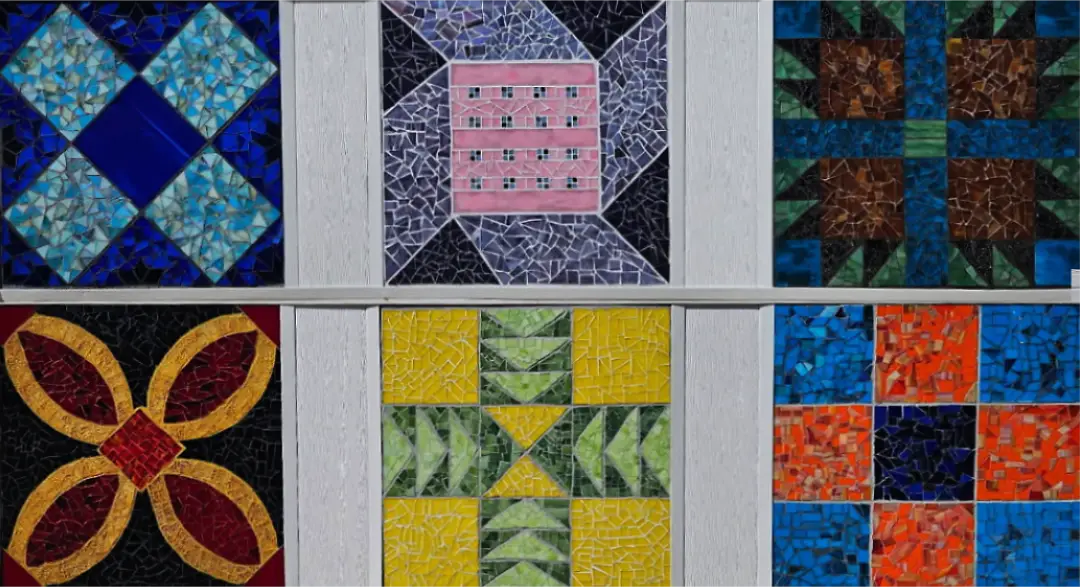
If you have been by the Mill recently you were sure to notice the colorful and attractive Quilt Squares along the front of the floodwall. And if you've wondered why they have a certain sparkle when the sun hits them, it is because they are made of bits of glass.
Over a year ago I was contacted by the Community ART Collaborative (CAC) about the possibility of doing a project in Edinburg. The CAC is a diverse group of volunteer art enthusiasts who have come together to create public art as a service to our communities. Their chosen medium is Glass Mosaics, tiny pieces of colored glass coming together to become a work of art.
At the time, I had just seen a TV show about a New England town where they place painted quilt squares on the buildings throughout the town and suggested quilt squares as a possibility. While necessary, the Flood Protection along the front of the Edinburg Mill has never been a thing of beauty.
It seemed like the perfect place to dress up with colorful quilt squares. The project would not only be a much needed improvement in the wall's appearance, it would serve as an extension of the exhibits in the Mill's Museum.
But first I had to get permission to do the project. For those of you who might not know, there is a Historic Preservation Easement on the Edinburg Mill that is held by the Virginia Department of Historic Resources (DHR). The Town made sure this was in place when they purchased the property to assure the Mill would be preserved for many years to come. Anything other than normal maintenance requires DHR review and approval. Thankfully, DHR agreed that the installation would serve as an extension of the Museum's exhibits.
We decided on 2 ft X 2 ft quilt squares and the ladies of the CAC decided to focus on an important time in the Mill's history, from its inception in 1848 until shortly after the Civil War. There is one exception with a Crazy Quilt pattern that was from the Victorian period of the late 19th century. There are a total of 20 Quilt Squares now displayed along the front wall.
As the sign that accompanies our display explains, the Quilt patterns interpreted are from the specific period of 1848-1860s and are based on stories passed down through oral traditions about the Underground Railroad which helped enslaved people travel to freedom. With each Coded Quilt pattern offering directions on how and when to leave and what route to take. Each pattern includes a description that explains how it might have been used.
The story of the Underground Railroad Quilt Patterns being used to help enslaved people escape slavery was promoted heavily by a book published in 1999. The book, *Hidden in Plain View: A Secret Story of Quilts and the Underground Railroad*, was written by Jacqueline Tobin and Raymond Dobard; it quickly became both popular and controversial.
We explain the issue in the Mill's exhibit as being caused by these stories being oral history. They offer limited written, documentary evidence confirming the use of an organized quilt code.
Jacqueline Tobin interviewed Ozella Williams, a South Carolina quilter who descended from enslaved people for her book. Williams talked about oral history shared by her grandmother explaining that enslaved people made quilt squares that included coded meanings to help guide the escapees to freedom.
According to the book, it all started with the Monkey Wrench pattern which is thought to be the symbol for a freed African American blacksmith. Able to travel between plantations, he was able to tell when the time was right to attempt to escape. When he gave the word, the Monkey Wrench quilt square would be hung outside. It would tell would be escapees to gather supplies and be ready.
When a Wagon Wheel quilt square appeared, enslaved people knew safe transportation was on its way. The book goes on to explain more quilt squares that were used to give guidance along the dangerous journey toward freedom.
One called the Log Cabin was thought to signal a safe house where runaways could find shelter. The Bear Paw pattern suggested that freedom seekers follow animal trails. These paths could provide safer routes through the wilderness, and often led to sources of food and water. As I mentioned earlier, each of our Quilt Squares at the Mill is complete with a description of the Code that might have been hidden in plain view to aid those seeking a new life.
Whether you believe the story of coded Quilt Squares aiding those escaping slavery or not; the actual quilt patterns are still beautiful works of art. And even more so when they are recreated as glass mosaics by the talented ladies of the CAC.



• Handicapped Accessible
• Elevator, Ramps & Chair-lift
• Ample Parking
• Handicapped Accessible • Elevator, Ramps & Chair-lift • Ample Parking
Could have spent all day here. Really superb, Thank you (p. Invernes Scotland)
Thank you for saving history
Love your brooms
My second time to the Mill. So interesting!
We truly believe the museum is historic and worthwhile to pursue
Good job!!!
Thanks for having us. This place is COOL!
One of the best local history Museums I have ever visited. Every display was a fun window into the past. It also has the very best collection of American Red Cross artifacts of any single place I have ever visited.
I hope this place is around for a long time, as I want to bring other history lovers to this treasure.
This is one of the best museum of this kind we have visited in 30 years travel cross country – be proud. The movie was so unique. (From: a museum curator in New Hampshire)
One of the best! We will be back
Friendly staff. Beautiful museum
Spectacular preservation and use
By Dan Harshman
If you have been by the Mill recently you were sure to notice the colorful and attractive Quilt Squares along the front of the floodwall. And if you've wondered why they have a certain sparkle when the sun hits them, it is because they are made of bits of glass.
Over a year ago I was contacted by the Community ART Collaborative (CAC) about the possibility of doing a project in Edinburg. The CAC is a diverse group of volunteer art enthusiasts who have come together to create public art as a service to our communities. Their chosen medium is Glass Mosaics, tiny pieces of colored glass coming together to become a work of art.
At the time, I had just seen a TV show about a New England town where they place painted quilt squares on the buildings throughout the town and suggested quilt squares as a possibility. While necessary, the Flood Protection along the front of the Edinburg Mill has never been a thing of beauty.
It seemed like the perfect place to dress up with colorful quilt squares. The project would not only be a much needed improvement in the wall's appearance, it would serve as an extension of the exhibits in the Mill's Museum.
But first I had to get permission to do the project. For those of you who might not know, there is a Historic Preservation Easement on the Edinburg Mill that is held by the Virginia Department of Historic Resources (DHR). The Town made sure this was in place when they purchased the property to assure the Mill would be preserved for many years to come. Anything other than normal maintenance requires DHR review and approval. Thankfully, DHR agreed that the installation would serve as an extension of the Museum's exhibits.
We decided on 2 ft X 2 ft quilt squares and the ladies of the CAC decided to focus on an important time in the Mill's history, from its inception in 1848 until shortly after the Civil War. There is one exception with a Crazy Quilt pattern that was from the Victorian period of the late 19th century. There are a total of 20 Quilt Squares now displayed along the front wall.
As the sign that accompanies our display explains, the Quilt patterns interpreted are from the specific period of 1848-1860s and are based on stories passed down through oral traditions about the Underground Railroad which helped enslaved people travel to freedom. With each Coded Quilt pattern offering directions on how and when to leave and what route to take. Each pattern includes a description that explains how it might have been used.
The story of the Underground Railroad Quilt Patterns being used to help enslaved people escape slavery was promoted heavily by a book published in 1999. The book, *Hidden in Plain View: A Secret Story of Quilts and the Underground Railroad*, was written by Jacqueline Tobin and Raymond Dobard; it quickly became both popular and controversial.
We explain the issue in the Mill's exhibit as being caused by these stories being oral history. They offer limited written, documentary evidence confirming the use of an organized quilt code.
Jacqueline Tobin interviewed Ozella Williams, a South Carolina quilter who descended from enslaved people for her book. Williams talked about oral history shared by her grandmother explaining that enslaved people made quilt squares that included coded meanings to help guide the escapees to freedom.
According to the book, it all started with the Monkey Wrench pattern which is thought to be the symbol for a freed African American blacksmith. Able to travel between plantations, he was able to tell when the time was right to attempt to escape. When he gave the word, the Monkey Wrench quilt square would be hung outside. It would tell would be escapees to gather supplies and be ready.
When a Wagon Wheel quilt square appeared, enslaved people knew safe transportation was on its way. The book goes on to explain more quilt squares that were used to give guidance along the dangerous journey toward freedom.
One called the Log Cabin was thought to signal a safe house where runaways could find shelter. The Bear Paw pattern suggested that freedom seekers follow animal trails. These paths could provide safer routes through the wilderness, and often led to sources of food and water. As I mentioned earlier, each of our Quilt Squares at the Mill is complete with a description of the Code that might have been hidden in plain view to aid those seeking a new life.
Whether you believe the story of coded Quilt Squares aiding those escaping slavery or not; the actual quilt patterns are still beautiful works of art. And even more so when they are recreated as glass mosaics by the talented ladies of the CAC.
• Handicapped Accessible • Elevator, Ramps & Chair-lift • Ample Parking

By Dan Harshman
If you have been by the Mill recently you were sure to notice the colorful and attractive Quilt Squares along the front of the floodwall. And if you've wondered why they have a certain sparkle when the sun hits them, it is because they are made of bits of glass.
Over a year ago I was contacted by the Community ART Collaborative (CAC) about the possibility of doing a project in Edinburg. The CAC is a diverse group of volunteer art enthusiasts who have come together to create public art as a service to our communities. Their chosen medium is Glass Mosaics, tiny pieces of colored glass coming together to become a work of art.
At the time, I had just seen a TV show about a New England town where they place painted quilt squares on the buildings throughout the town and suggested quilt squares as a possibility. While necessary, the Flood Protection along the front of the Edinburg Mill has never been a thing of beauty.
It seemed like the perfect place to dress up with colorful quilt squares. The project would not only be a much needed improvement in the wall's appearance, it would serve as an extension of the exhibits in the Mill's Museum.
But first I had to get permission to do the project. For those of you who might not know, there is a Historic Preservation Easement on the Edinburg Mill that is held by the Virginia Department of Historic Resources (DHR). The Town made sure this was in place when they purchased the property to assure the Mill would be preserved for many years to come. Anything other than normal maintenance requires DHR review and approval. Thankfully, DHR agreed that the installation would serve as an extension of the Museum's exhibits.
We decided on 2 ft X 2 ft quilt squares and the ladies of the CAC decided to focus on an important time in the Mill's history, from its inception in 1848 until shortly after the Civil War. There is one exception with a Crazy Quilt pattern that was from the Victorian period of the late 19th century. There are a total of 20 Quilt Squares now displayed along the front wall.
As the sign that accompanies our display explains, the Quilt patterns interpreted are from the specific period of 1848-1860s and are based on stories passed down through oral traditions about the Underground Railroad which helped enslaved people travel to freedom. With each Coded Quilt pattern offering directions on how and when to leave and what route to take. Each pattern includes a description that explains how it might have been used.
The story of the Underground Railroad Quilt Patterns being used to help enslaved people escape slavery was promoted heavily by a book published in 1999. The book, *Hidden in Plain View: A Secret Story of Quilts and the Underground Railroad*, was written by Jacqueline Tobin and Raymond Dobard; it quickly became both popular and controversial.
We explain the issue in the Mill's exhibit as being caused by these stories being oral history. They offer limited written, documentary evidence confirming the use of an organized quilt code.
Jacqueline Tobin interviewed Ozella Williams, a South Carolina quilter who descended from enslaved people for her book. Williams talked about oral history shared by her grandmother explaining that enslaved people made quilt squares that included coded meanings to help guide the escapees to freedom.
According to the book, it all started with the Monkey Wrench pattern which is thought to be the symbol for a freed African American blacksmith. Able to travel between plantations, he was able to tell when the time was right to attempt to escape. When he gave the word, the Monkey Wrench quilt square would be hung outside. It would tell would be escapees to gather supplies and be ready.
When a Wagon Wheel quilt square appeared, enslaved people knew safe transportation was on its way. The book goes on to explain more quilt squares that were used to give guidance along the dangerous journey toward freedom.
One called the Log Cabin was thought to signal a safe house where runaways could find shelter. The Bear Paw pattern suggested that freedom seekers follow animal trails. These paths could provide safer routes through the wilderness, and often led to sources of food and water. As I mentioned earlier, each of our Quilt Squares at the Mill is complete with a description of the Code that might have been hidden in plain view to aid those seeking a new life.
Whether you believe the story of coded Quilt Squares aiding those escaping slavery or not; the actual quilt patterns are still beautiful works of art. And even more so when they are recreated as glass mosaics by the talented ladies of the CAC.